Due to the excellent thermal quality of the building’s enclosure materials (walls, windows and doors), the use of internal heat sources (from electrical devices normally used in homes) and minimising ventilation losses with a controlled system with heat recovery, passive housing does not need conventional cooling or heating mechanisms. The demand for heating is less than 15 kWh/m2 per year, which means a reduction of more than 90% of the average.
Residences built in places with moderate climates should take into account the following aspects: the U-values (overall heat transfer coefficient) of all the building envelope constructions should be approximately 0.1 W/m2K, and the windows and doors should have a U-value of 0.8 W/m2K, including the frame.
To minimise the excess heat typical of summer, the use of natural ventilation at night and the creation of shaded areas should be planned.
In countries with warm climates, the U-values of all building envelope constructions should be between 0.3 and 0.45 W/m2K, and windows and doors should have a U-value of 1.1 W/m2K, including the frame. To minimise excess heat in summer, natural ventilation should be planned for at night and shaded areas should be created.
In countries with cold climates, the U-values of all building envelope constructions should be approximately 0.07 W/m2K, and windows and doors should have a U-value of 0.6 W/m2K, including the frame. In some areas, it may be necessary to minimise excess summer heat by reducing the amount of light entering through the windows.
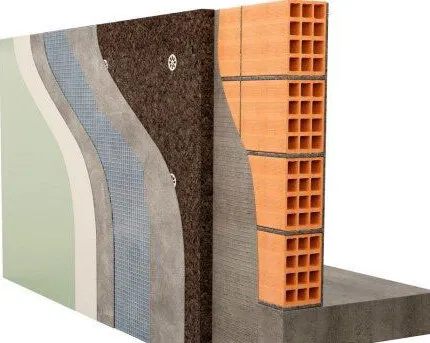
The Passive House model makes the use of active heating systems practically unnecessary, as it mainly draws on heat from the sun, heat generated by the occupants of the house and domestic appliances, and heat recovered from waste air. How is this possible? Firstly, because of the ‘passive’ components, such as thermally insulated windows, heat exchange systems and efficient insulation. The Passive House model today fulfils the energy efficiency requirements of tomorrow.